
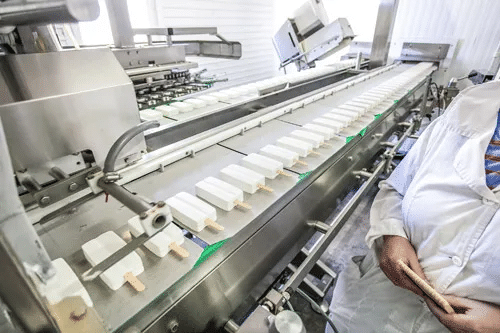
Packaging Machine for Fresh Produce & Frozen Foods: Semi-Auto Solutions for Small Producers
Fresh produce and frozen foods represent one of the fastest-growing segments of the American food industry — but also one of the most challenging to package efficiently. From delicate berries that bruise at the slightest impact to ice-crystal-prone frozen vegetables that demand tight seals, these products present unique packaging obstacles that generic equipment simply can't handle.
For small producers operating with tight margins and limited staff, the question isn't whether to automate — it's how to do it without spending $500,000 on a fully automated line they don't need yet. The answer, as with many small food operations, is semi-automatic packaging equipment — the technology tier that delivers massive gains at a fraction of the cost.
In this guide, we'll explore the specific pain points facing small fresh produce and frozen food producers, compare manual versus semi-auto workflows, and recommend the right packaging machine for fresh produce and frozen food operations based on real-world results.
Why Fresh Produce & Frozen Foods Are Uniquely Challenging to Package
Unlike shelf-stable dry goods, fresh produce and frozen foods come with constraints that add complexity to every packaging step:
- Temperature sensitivity: Frozen products must stay below 0°F during packaging. Fresh produce needs cold-chain integrity from pack to shelf. Any equipment delay or manual handling gap risks product degradation.
- Variable product shapes and sizes: A bag of mixed greens doesn't weigh the same as a bag of broccoli florets. Frozen berry sizes vary wildly within a single batch. Manual weighing is slow and inaccurate.
- Moisture and condensation: Fresh produce releases moisture. Frozen products create condensation when exposed to warm air. Both challenge label adhesion and seal integrity — two areas where semi-auto equipment excels over manual methods.
- Shelf-life pressure: Fresh produce has days, not months. Every minute spent on manual packaging is a minute off the product's retail shelf life. Frozen foods face similar urgency around ice crystal formation and freezer burn.
- Regulatory compliance: USDA organic certification, country-of-origin labeling (COOL), and traceback requirements all demand precise, consistent labeling — something manual operations struggle to maintain at scale.
"We were hand-packing salad bags and losing 15% of our product to bruising before it even left the facility. The manual process was destroying our margins." — Small organic produce farm, California
Manual vs. Semi-Auto: The Real Cost of Doing It by Hand
Let's look at what manual packaging actually costs a small frozen food producer — and where packaging line efficiency gains come from with semi-automatic equipment.
The Manual Packaging Reality
A typical small frozen food operation running manual packaging might look like this:
- 4-6 workers on the packaging line at $15-17/hour each
- 15-20 units per minute throughput (one worker = one fill-and-seal cycle)
- ±8-12% fill weight variance — meaning consistent product giveaway
- 2-3 seal failures per hour from inconsistent manual sealing pressure
- Label placement errors requiring rework on 5-8% of output
For a small producer doing $400K in annual revenue, these inefficiencies cost approximately $65,000-85,000 per year in excess labor, product waste, and rework.
The Semi-Auto Upgrade
With a semi-automatic packaging machine — a weigh-fill system paired with a semi-auto tray sealer or flow wrapper — the same operation transforms:
- 2-3 operators instead of 4-6
- 30-60 units per minute throughput (2-3x improvement)
- ±1-2% fill weight variance — eliminating product giveaway
- Near-zero seal failures with consistent machine-applied pressure
- Precision label placement with semi-auto labelers
The labor savings alone — dropping from 6 workers to 3 at $16/hour — represent $74,880 annually. Add the reduced waste and eliminated rework, and total savings approach $100,000 per year.
Best Semi-Auto Equipment for Fresh Produce Packaging
Fresh produce operations have distinct needs from frozen food lines. Here's what works best for each:
Fresh Produce: Weigh-Fill + Tray Sealer Systems
The ideal packaging machine for fresh produce combines a multi-head or combination weigher with a semi-automatic tray sealer. This setup handles everything from pre-cut salad mixes to whole berries:
- Multi-head combination weigher: Weighs and portions product with ±1g accuracy. Critical for products sold by weight (most fresh produce). Speeds of 30-50 weigh-cycles per minute.
- Semi-auto tray sealer: Operator places filled trays on the sealing station, machine applies film and seals. Handles MAP (Modified Atmosphere Packaging) for extended shelf life — a game-changer for fresh produce.
- Thermal transfer date coder: Integrates with the sealer to print lot codes, best-by dates, and organic certification numbers directly on the film.
Why this combination works: Fresh produce needs gentle handling, precise weight control, and atmosphere management. A semi-auto system lets operators control product placement while the machine handles the precision tasks — filling, sealing, and coding — that determine shelf life and compliance.
Explore our full range of food packaging solutions designed for perishable products.
Frozen Foods: Weigh-Fill + Flow Wrap or Pouch Seal
Frozen foods demand tight seals and moisture-resistant packaging. The right setup includes:
- Linear or combination weigher: Handles frozen vegetables, fruits, meals, and ice cream pints with consistent portioning.
- Semi-auto flow wrapper or pouch sealer: Creates hermetic seals that prevent freezer burn. Flow wrappers handle bags and pouches at 40-80 units per minute. Pouch sealers work well for stand-up pouches and gusseted bags.
- Checkweigher (optional but recommended): Verifies fill weights downstream and rejects under/overweight packages automatically.
The key advantage for frozen operations: semi-auto equipment reduces the time product spends out of the freezer. A manual operation might keep frozen product at ambient temperature for 20-30 minutes during packaging. Semi-auto systems cut that to 3-5 minutes, significantly reducing ice crystal formation and preserving product quality.
For a complete equipment overview, visit our product catalog to see all semi-automatic options.
ROI Breakdown: Fresh Produce vs. Frozen Foods
Let's look at real-world ROI projections for both segments:
Fresh Produce Scenario
- Operation: Small organic salad producer, $600K revenue, 5 manual packagers
- Investment: Semi-auto weigh-fill + MAP tray sealer + date coder = $55,000
- Labor savings: 3 fewer workers × $33,280/year = $99,840/year
- Waste reduction: 40% less bruising + accurate weights = $22,000/year
- Extended shelf life (MAP): 2-3 extra days retail life = $15,000/year in reduced returns
- Total annual benefit: $136,840
- Payback period: 4.8 months
Frozen Food Scenario
- Operation: Small frozen meal producer, $500K revenue, 4 manual packagers
- Investment: Semi-auto weigh-fill + flow wrapper + checkweigher = $48,000
- Labor savings: 2 fewer workers × $33,280/year = $66,560/year
- Waste reduction: Accurate fills + fewer seal failures = $18,000/year
- Quality improvement: Reduced freezer burn = $12,000/year in fewer customer complaints
- Total annual benefit: $96,560
- Payback period: 5.9 months
Both scenarios deliver payback in under 6 months — making packaging machine investment one of the highest-ROI capital expenditures a small perishable food producer can make.
Choosing the Right Semi-Auto Packaging Equipment
Not every semi-automatic packaging equipment setup fits every operation. Here's how to match equipment to your specific needs:
- Bagged salads and leafy greens: Multi-head weigher + vertical form-fill-seal (VFFS) or pre-made pouch filler. Focus on speed and gentle product handling.
- Berries and small fruits: Combination weigher + clamshell tray sealer with MAP capability. Precision weighing is critical at higher price-per-pound products.
- Frozen vegetables and mixed products: Linear weigher + flow wrapper. Cost-effective for high-volume, lower-margin products.
- Frozen meals and prepared foods: Combination weigher + tray sealer or VFFS. MAP capability extends shelf life significantly.
- Ice cream and dairy desserts: Cup filler or piston filler + lidding/sealing machine. Handles viscous products and foil lids.
Our labeling machines integrate seamlessly with any semi-auto line, handling everything from nutrition facts panels to organic certification labels with consistent, regulation-compliant placement.
Getting Started: A Practical Roadmap
If you're running a small fresh produce or frozen food operation and considering the move from manual to semi-auto, here's a step-by-step approach:
- Audit your current costs: Calculate your true packaging labor spend, product waste rate, and rework frequency. Most operators are surprised by how high the numbers are.
- Identify your bottleneck: Is it fill accuracy? Seal integrity? Labeling speed? The bottleneck determines which semi-auto station delivers the biggest first impact.
- Request a product test: Reputable equipment suppliers will run your actual product through their machines before you buy. This is essential — fresh produce and frozen foods behave differently depending on shape, moisture, and temperature.
- Consider your cold chain: For frozen foods, evaluate how much product time is spent at ambient temperature during packaging. Reducing this time alone can justify the equipment investment.
- Plan for MAP if you sell fresh produce: Modified Atmosphere Packaging can add 2-3 days of shelf life — a massive competitive advantage that pays for the equipment upgrade on its own.
- Start with one station: You don't need to automate everything at once. A single semi-auto weigh-fill station can transform your operation, and you can add sealing, labeling, and coding equipment over time.
For guidance on equipment selection, our food packaging solutions page breaks down the best configurations by product type and production volume.
Ready to Upgrade Your Fresh Produce or Frozen Food Packaging?
Get a free ROI analysis tailored to your specific operation. Our packaging engineers will review your product type, volume, and current setup — then recommend the right semi-auto solution that pays for itself in under 6 months.
Request Free Consultation