Packaging Machine for Bakery & Confectionery: Semi-Auto Solutions for Small Producers in 2026
The bakery and confectionery industry is one of the most dynamic segments in US food manufacturing — and one of the most packaging-intensive. Whether you're producing artisan cookies, wrapped candy bars, frozen pastries, or gourmet chocolate truffles, your packaging line is where product quality meets customer perception. For small bakery and candy producers, the challenge is clear: packaging automation is no longer optional, but the cost of fully automated lines remains out of reach.
The good news? Semi-automatic packaging equipment delivers the precision, speed, and consistency your customers demand — at a fraction of the cost. In this guide, we'll explore the specific pain points facing small bakery and confectionery producers, how semi-auto systems solve them, and which packaging machine for bakery operations delivers the best ROI.
Why Bakery & Confectionery Packaging Is Unique
Packaging baked goods and confections isn't like packaging dry powders or liquids. Your products come with a unique set of challenges that generic packaging equipment simply can't handle:
- Fragility: Cookies crack, pastries crumble, chocolates melt. Every handling point on your line is a potential damage risk.
- Variety: A single bakery might produce 40+ SKUs — from 2 oz cookie packs to 1 lb family-size boxes — requiring frequent changeovers.
- Shelf life pressure: Fresh baked goods have 7-14 day shelf lives. Every hour lost to slow packaging is product that never reaches the shelf.
- Regulatory labeling: Nutritional facts, allergen declarations, and lot codes must be accurate and legible on every unit.
- Presentation matters: Unlike bulk commodities, bakery and confectionery products sell on visual appeal. Wrinkled bags, crooked labels, or inconsistent fills immediately erode brand value.
These factors make bakery packaging automation both more necessary and more complex than in many other food segments. That's exactly why semi-automatic systems — which combine machine precision with human oversight — are the sweet spot for small producers.
The Real Cost of Manual Packaging in Bakery Operations
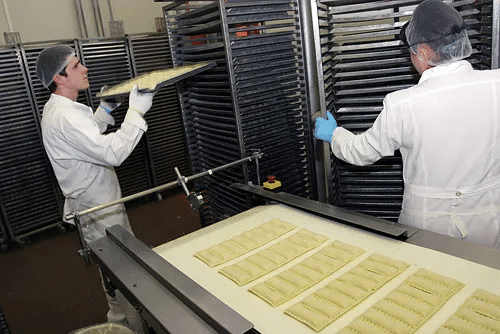
Walk into any small bakery or candy kitchen and you'll see the same scene: skilled workers spending half their time filling, sealing, and labeling packages by hand. It's slow, inconsistent, and expensive. Here's what the numbers look like:
- Manual throughput: 5-10 packages per minute per worker — and that rate drops sharply after the first hour as fatigue sets in.
- Fill weight variance: ±5-10% is common with hand-filling. For a 12 oz cookie pack, that means some customers get 10.8 oz (legal risk) while others get 13.2 oz (free product).
- Labeling errors: Hand-applied labels have a 3-5% misalignment rate, creating an unprofessional appearance and potential compliance issues.
- Labor dependency: When your best packager calls in sick, your entire output drops. There's no redundancy in a manual system.
For a small bakery producing $400K-$800K in annual revenue, these inefficiencies can represent $40,000-$80,000 per year in hidden costs — from product giveaway to overtime to rejected orders.
"We were hand-packing 2,000 units a day and our reject rate was 8%. After switching to semi-auto, we do 5,000 units with less than 1% rejects. The machine paid for itself in under 5 months." — Artisan cookie producer, Oregon
Semi-Automatic Packaging Equipment for Bakery & Confectionery
Semi-automatic packaging equipment for bakeries and confectioners typically handles the precision tasks that cause the most problems in manual operations — while keeping your experienced team in control of quality and changeovers. Here are the key equipment categories:
Flow Wrap Machines for Individual Items
Flow wrapping is the workhorse of confectionery packaging solutions. It's ideal for individually wrapped cookies, candy bars, granola bars, and snack packs. A semi-auto flow wrapper feeds product on a conveyor, wraps it in film, and seals all three sides in a single pass. Throughput: 30-120 units per minute depending on product size.
Weigh-Fill Systems for Multi-Pack and Bulk Packaging
For products sold by weight — loose cookies, candy mixes, trail mix, or pastry assortments — a semi-automatic weigh-fill system replaces hand-scooping with precision portioning. Accuracy of ±1% eliminates the product giveaway that eats into margins on weight-based products.
Tray Sealers and MAP Systems
Fresh pastries, cakes, and delicate confections benefit from tray sealing with Modified Atmosphere Packaging (MAP). This technology replaces oxygen inside the package with nitrogen or CO2, extending shelf life from 3 days to 10-14 days. For small bakeries competing with grocery store in-store bakeries, MAP is a game-changer.
Semi-Auto Labeling Machines
Whether you need top labels, wrap-around labels, or tamper-evident seals, a semi-automatic labeling machine applies them consistently at 20-40 units per minute. Modern systems support barcode printing, nutritional facts, and variable data like lot codes and dates — all in a single pass.
5 Ways Semi-Auto Equipment Transforms Bakery Production
1. Packaging Line Efficiency Gains of 3-5x
Where a manual line handles 5-10 units per minute per operator, small bakery packaging automation delivers 30-60 units per minute with the same headcount. That's a 5x improvement in throughput without adding a single employee.
2. Consistent Presentation = Stronger Brand
Every package that leaves your line looks identical — properly filled, neatly sealed, straight labels. For bakery products competing on shelf appeal, this consistency is a powerful differentiator. Retail buyers notice, and they reward it with better placement.
3. Dramatic Waste Reduction
Manual filling of bakery products wastes 5-10% of product through overfilling and breakage. Semi-auto systems with precision weighing and gentle product handling cut waste to under 2%. For a bakery doing $500K in annual revenue, that's $15,000-$40,000 saved.
4. Faster Changeovers for Multi-SKU Operations
Modern semi-automatic packaging equipment is designed for quick changeovers. Switching from cookie packs to candy bars might take 10-15 minutes instead of 45-60 minutes on older equipment. For bakeries with 20+ SKUs, this flexibility is essential.
5. Food Safety Compliance Simplified
Semi-auto equipment with stainless steel contact surfaces and enclosed filling zones reduces contamination risk. Built-in date coding and lot tracking support HACCP compliance and make recall management straightforward — critical for bakeries selling through retail distribution.
ROI Analysis: What Small Bakery Producers Can Expect
Let's model a typical scenario for a small confectionery producer making wrapped chocolate bars:
- Current state: 5 manual packagers at $16/hour = $166,400/year in labor
- Packaging investment: Semi-auto flow wrapper + labeling system = $38,000
- After upgrade: 2 operators running semi-auto = $66,560/year in labor
- Annual labor savings: $99,840
- Waste reduction savings: $12,000/year
- Total annual savings: $111,840
- Payback period: 4.1 months
These numbers are consistent across the small bakery packaging sector. The ROI on semi-automatic equipment is compelling because bakery and confectionery products have high unit counts and tight margins — exactly the conditions where packaging efficiency has the biggest impact.
Choosing the Right Packaging Line for Your Bakery
The right packaging line efficiency solution depends on your product type, volume, and growth plans. Here's a quick guide:
- Individual wrapped items (cookies, candy bars, snack packs): Start with a semi-auto flow wrapper. Add an automatic infeed conveyor as volume grows.
- Weight-based assortments (candy mixes, pastry boxes): Invest in a multi-head weigh-fill system with a bag or tray sealer.
- Fresh bakery items (cakes, pastries): A tray sealer with MAP capability will extend shelf life and open retail distribution channels.
- Gift boxes and premium packaging: Semi-auto cartoning systems with manual loading give you speed on the box formation while preserving the hand-crafted presentation.
The key is to start with your biggest bottleneck — whether that's fill speed, sealing consistency, or labeling accuracy — and build your packaging automation strategy from there.
How to Get Started
If you're ready to explore small bakery packaging automation, here's the practical path forward:
- Audit your current line: Time each step — filling, sealing, labeling, case packing. Identify where you're losing the most time and money.
- Define your product mix: List your top 5-10 SKUs by volume. Equipment selection should be driven by your highest-volume products.
- Request a product test: Send your actual product to equipment suppliers for trial runs. A food packaging equipment specialist can run your cookies, candies, or pastries through their machines and show you real throughput numbers.
- Calculate your true costs: Include labor, waste, overtime, rejected orders, and missed delivery penalties. Most bakery operators are shocked by the total.
- Plan for growth: Choose packaging equipment that scales with you — modular systems that let you add conveyors, additional stations, or labeling capacity as demand grows.
Whether you need a single labeling machine to replace hand-applied labels or a complete semi-auto packaging line, the right equipment will pay for itself in months — not years.
Ready to Upgrade Your Bakery Packaging Line?
Get a free consultation and ROI analysis for your specific bakery or confectionery operation. Our team will recommend the right semi-auto solution based on your products, volume, and budget.
Request a Free Quote